For those constantly chasing adrenaline, finding something new in winter can be tricky. Chances are, you’ve already mastered alpine skiing, snowboarding, natural luge , and even climbed a few alpine peaks. What’s next?
Skijoring might just be the most wild and extraordinary experience in winter sports.
The History of Skijoring
It all began with the gold rush in the late 19th century. Returning prospectors brought back a new method of transportation using dog sleds, a tradition practiced by the indigenous peoples of North America’s northern regions. Immigrants from Scandinavia, in turn, introduced another tradition to America—harnessing horses to sleds and even skis.
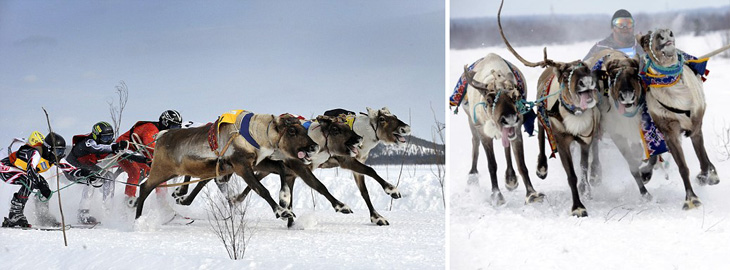 Skijoring competitions with reindeer at an ethnic festival in northern Russia
The first mention of using animals as a pulling force for a person on “skis” was found in Persian sources over a thousand years ago. These accounts referenced dogs, with the described areas being in the Altai, Mongolia, and Kazakhstan regions.
The word skikjøring is Norwegian and means “ski driving.” Originally, this activity helped mail carriers move faster in rural areas and allowed hunters to survey their traps. For centuries, reindeer, horses, and dogs were used to “pull the skis.” With the advent of snowmobiles and chairlifts, skijoring evolved into its own sport.
The timeline of skijoring’s development in sports is roughly as follows:
In the 1900s, horse-based skijoring made its way to North America. By 1915, it became a main attraction at Lake Placid (New York), eventually conquering the Dartmouth Winter Carnival.
In France and Switzerland, skijoring was at its peak of popularity between 1912-1914. By the 1950s and 60s, Europeans were attaching skis to motorcycles and cars.
In 1928, the discipline was demonstrated at the Winter Olympics alongside military patrol competitions. Other earlier records date back to 1901.
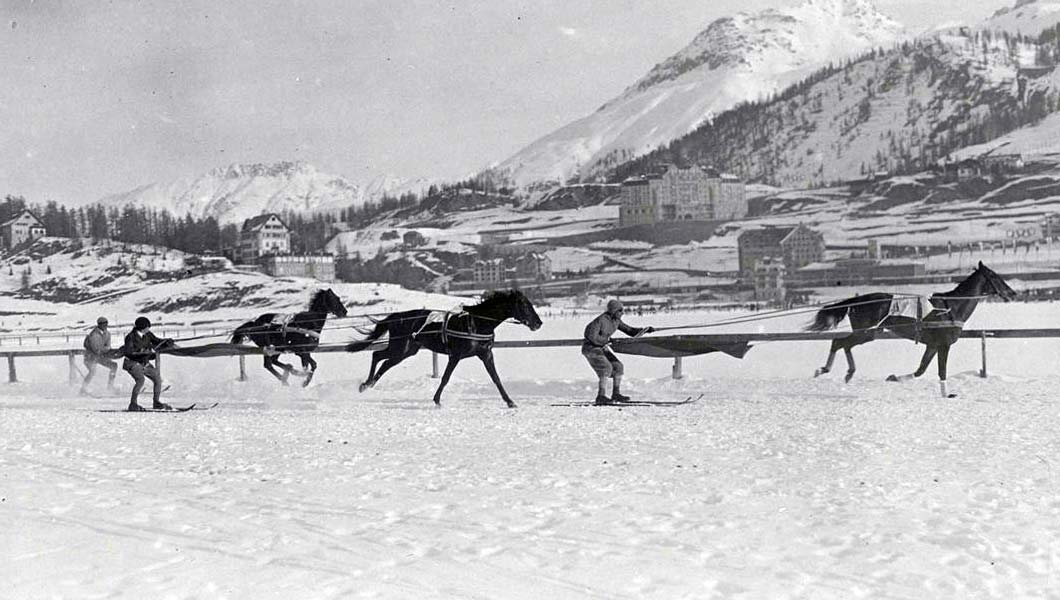 The first skijoring event at the 1928 Olympics
By the 1930s, paired skijoring races were being held down snow-covered main streets in the mountain towns of Wyoming and Colorado.
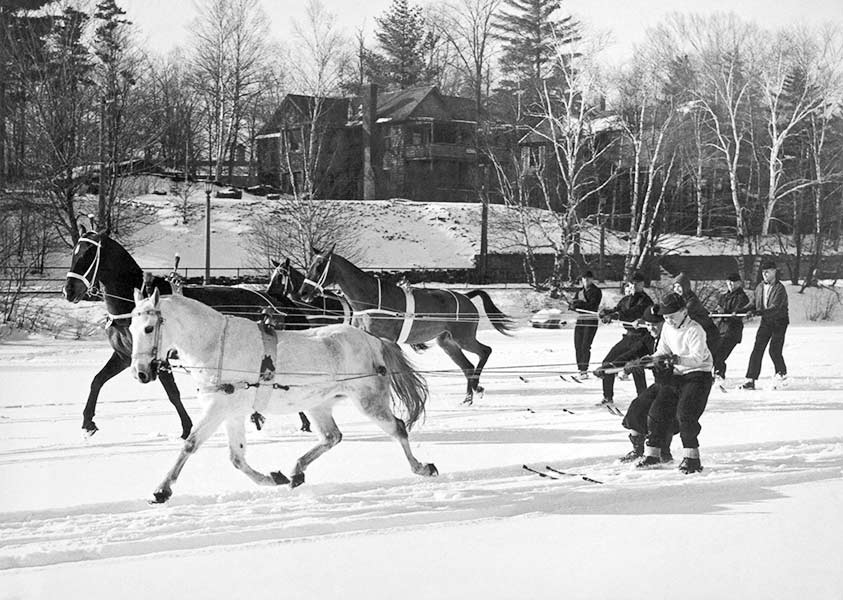 1936. New York
Soldiers of the U.S. 10th Mountain Division, returning from World War II (“soldiers on skis”), helped develop the sport in America and laid the foundations for professional competitions.
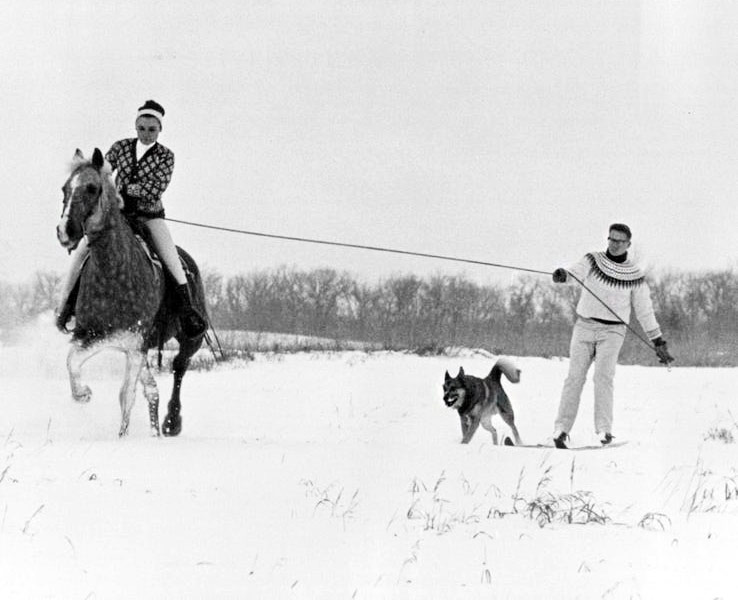 1964. North Oaks
Today, the European center of skijoring is St. Moritz, Switzerland, during the White Turf event, which also features snow horse racing, chariot races, and other non-traditional winter sports. In the U.S., competitions are held in Colorado, Montana, Oregon, Wisconsin, and South Dakota. Skijoring with horses and dogs is incredibly popular.
The IFSS, or the International Federation of Sleddog Sports (headquartered in Brussels, Belgium), sponsors an annual World Championship in dog skijoring. The IFSS is actively pursuing membership in the IOC (International Olympic Committee).
The discipline may be included in the Olympic program by 2026, though champions in skijoring have been celebrated worldwide for decades. Organizations such as Skijor International, LLC and Skijor USA are also working towards this goal.
Dog Skijoring
You love skiing. You have a dog that weighs over 15 kilograms. That’s it—you can skijor! It’s a team activity, and to succeed, you’ll need to communicate with your four-legged friend “as equals,” learn a few new commands, and gear up with the appropriate equipment. Let’s bring in the experts to break down the basics of dog skijoring: commands, equipment, and first steps.
Basic requirements for skiing with your dog:
Your pet must love winter as much as you do. Otherwise, it won’t be fun for either of you. A dog’s unstoppable passion for running “flat out” is usually a problem for owners—but not in this case.
Make sure your dog is healthy and has no contraindications for this type of activity. Your knees and lower back should also be in good condition.
If you’re a beginner skier, it’s best not to immediately involve your dog in training. Constant falls will be inevitable. The animal may grow anxious and lose interest in skijoring before experiencing its full joy.
You can practice skijoring with any dog breed, but the dog’s weight should be at least 15 kg. A small companion might be full of enthusiasm, but it’s simply unsafe for its health.
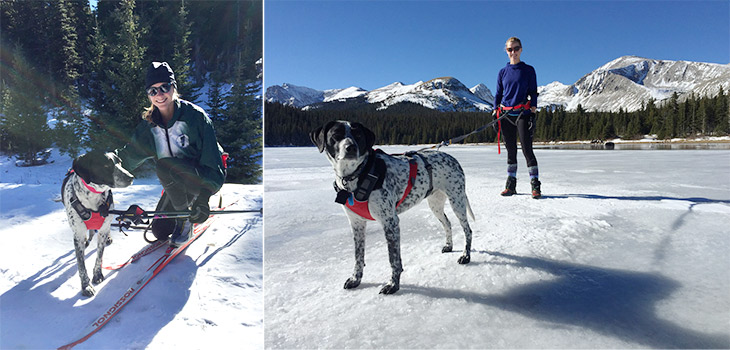 Agent K-9 Belle and her curator, Alaska 2016
Basic commands should be executed “perfectly.” Teaching a few new “skiing” commands won’t be difficult. Quick response ensures control and protection from injuries. The hardest part is helping the dog understand that it’s allowed to pull on the leash in the harness but not in regular situations.
You need a belt and an elastic leash. An athletic belt or a climbing belt will do, but you can also purchase a dedicated skijoring belt. The leash should have an elastic part to prevent you from falling and getting injured during a sudden start. More details about the gear later.
A high-quality, comfortable harness is essential. For longer outings, you might need additional clothing or even dog boots.
Skijoring Equipment
You can’t do without a pair of cross-country skis, but nothing too special is required. Note that the vast majority of animals are either wary of skis or try to play with them. Therefore, introduce your dog to skiing equipment in advance.
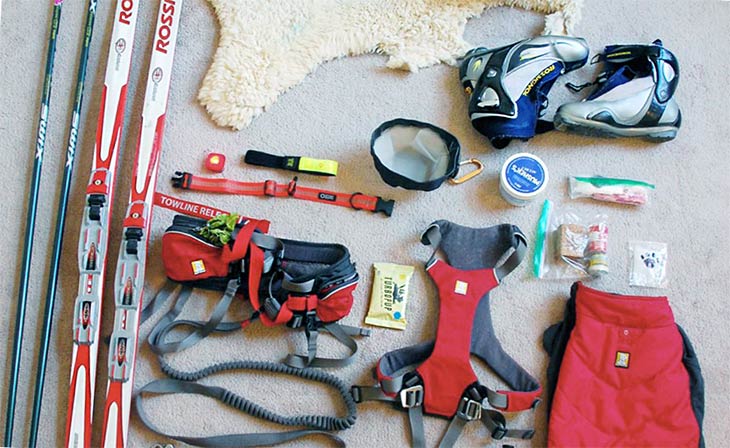 skijoring-amunizija
A harness or sledding harness is the most crucial part of the equipment. The dog should feel comfortable and safe in the harness, as it can’t stop you at any moment and ask you to remove any irritating straps. You can even make a skijoring or canicross belt with your own hands, as well as the harness.
Initially, put the harness on for regular walks so the dog can get used to the feeling. Of course, this should be accompanied by praise and treats. This approach gives you the opportunity to check the size and comfort of the equipment without risking the dog’s first run being ruined by chafed skin or sides. Never leave a dog unsupervised in a harness.
Dog boots are a topic of debate. If you’re not planning to accustom your companion to wearing booties, you’ll need to regularly check its paws for ice blisters. However, during skijoring, dog boots are quite justified.
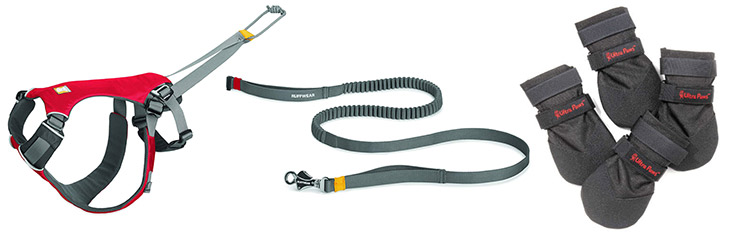 snarjazhenie-dla-skidjoringa
I would also include a water container as part of the gear. Allowing your pet to “eat snow” is not recommended. Even in an open field, there can be pieces of glass and other dangerous objects, not to mention the risk of catching a cold.
How to Begin
If you’re new to skiing, it’s worth taking a few lessons on cross-country terrain. In remote areas or backcountry skiing, you’ll encounter deep snow, and the dog will help pave the trail. In such conditions, you’ll need wide skis with a raised tip.
Some dogs feel completely natural in a harness, as the activity stimulates their innate instincts. Others may require more time and training to understand what the owner expects of them. Don’t give up quickly if your dog gets overexcited at first; be patient.
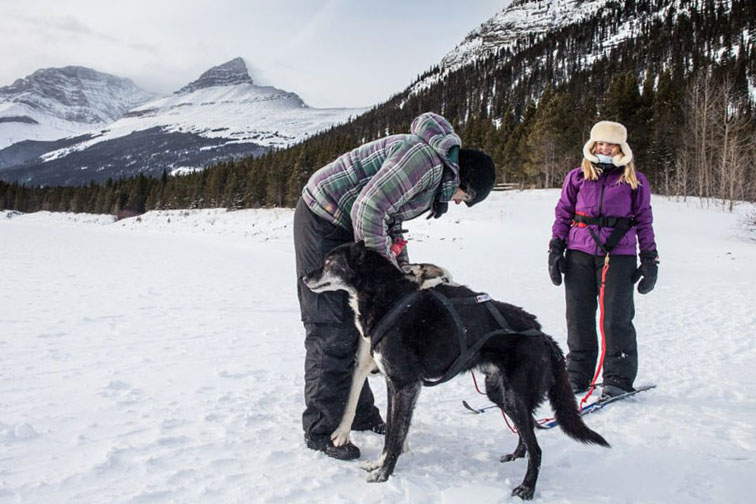 skijoring dog
For the initial outings, keep the ski runs short and always end the session before your four-legged partner shows signs of fatigue. This prevents them from losing interest in the activity. Choose trails that are well-trodden; a dog performs best on familiar and straightforward routes. Starting in a local park is a good idea.
The most effective way to teach your pet to skijor is to ski together with a dog that already knows how – the trainee will learn through imitation. The biggest challenge is teaching the dog to maintain a consistent pace. The first step is adjusting to a specific leash tension: at the start, you need to slightly tension the leash for a few seconds and not allow the dog to move passively, but rather respond to the tension. You might need a partner’s help here to hold the dog. Incidentally, there are many resources explaining how to teach your dog to pull (as odd as that might sound).
Basic Commands for Skijoring
To communicate with your dog while skiing, it’s essential to learn some new commands and signals. You can invent your own words or use the traditional list adopted by Western skijorers.
- “Line Out”: The dog moves into the starting position and stretches the leash. Starting directly at the skier’s feet is not allowed.
- “Hike” or “Go”: A command to start moving.
- “Left” and “Right”: It’s convenient to practice turns on trails where a turn is inevitable. Some dogs may take a few seconds to “process the request,” so try giving the turn command in advance.
- “Stop”: Begin braking, then give the command. In certain cases, the dog may interpret the skier’s resistance as a signal to pull harder.
- “Easy”: Slow down.
- “Round”: A 180-degree turn, returning to the starting point.
Maybe you and your Goofy won’t become skiing champions, but you’ll definitely have a blast!
Skijoring with Horses
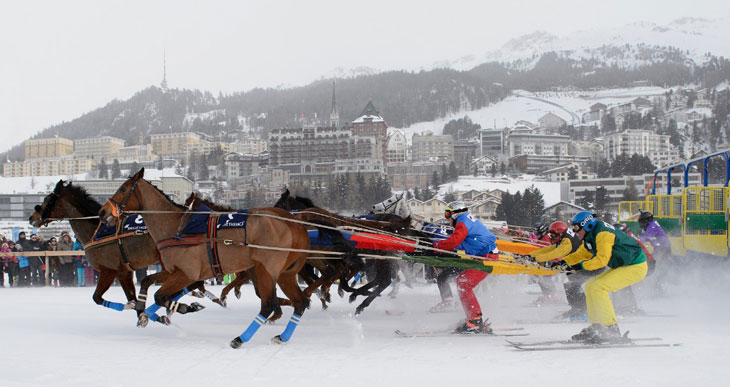
This is a three-member race: a skier, a rider, and a horse. Skijoring with horses is one of the wildest and craziest ways to have fun in winter—a truly extreme winter adventure!
 Skijoring with Horses
What it’s about: A snowboarder or skier tries to hold onto a towing rope as a racing horse gallops at full speed, reaching speeds of 60 km/h across a frozen lake or snowy field. The horse makes a sharp pull at the start, and the skier’s main challenge is to maintain balance right from the beginning. Sometimes, the race doesn’t involve a rider, making the experience even more extreme and uncontrollable.
Skijoring with Horses
What it’s about: A snowboarder or skier tries to hold onto a towing rope as a racing horse gallops at full speed, reaching speeds of 60 km/h across a frozen lake or snowy field. The horse makes a sharp pull at the start, and the skier’s main challenge is to maintain balance right from the beginning. Sometimes, the race doesn’t involve a rider, making the experience even more extreme and uncontrollable.
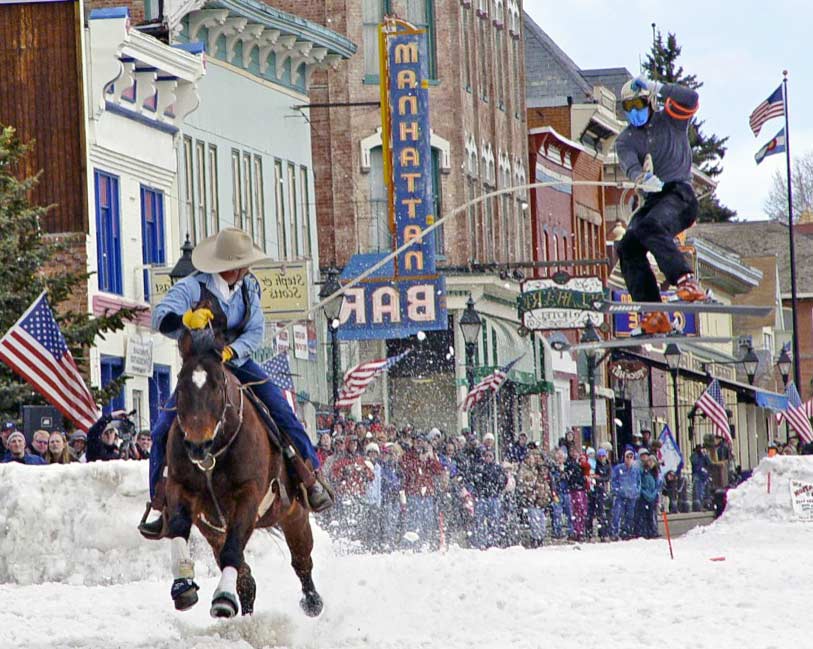
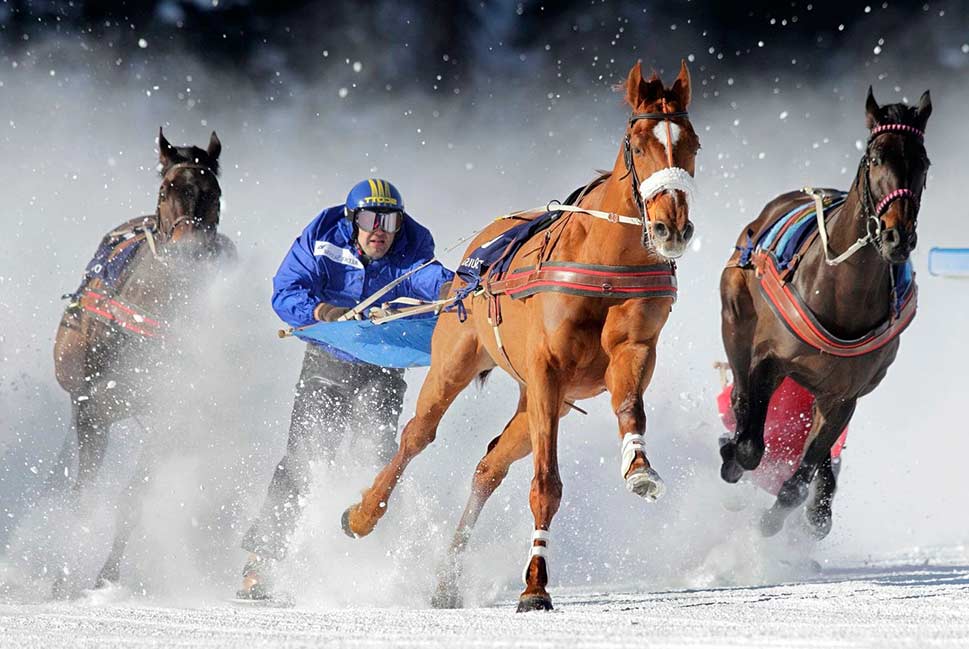
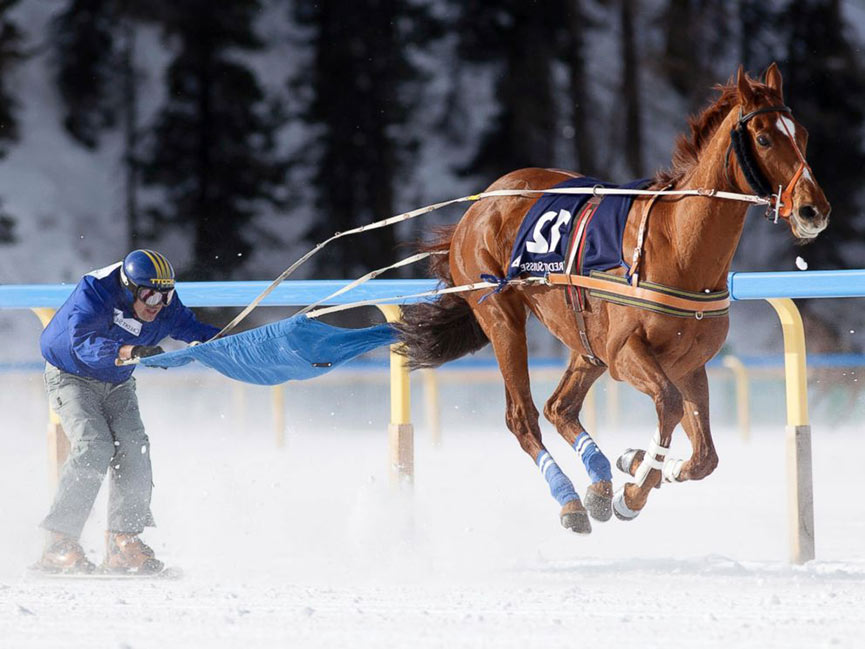
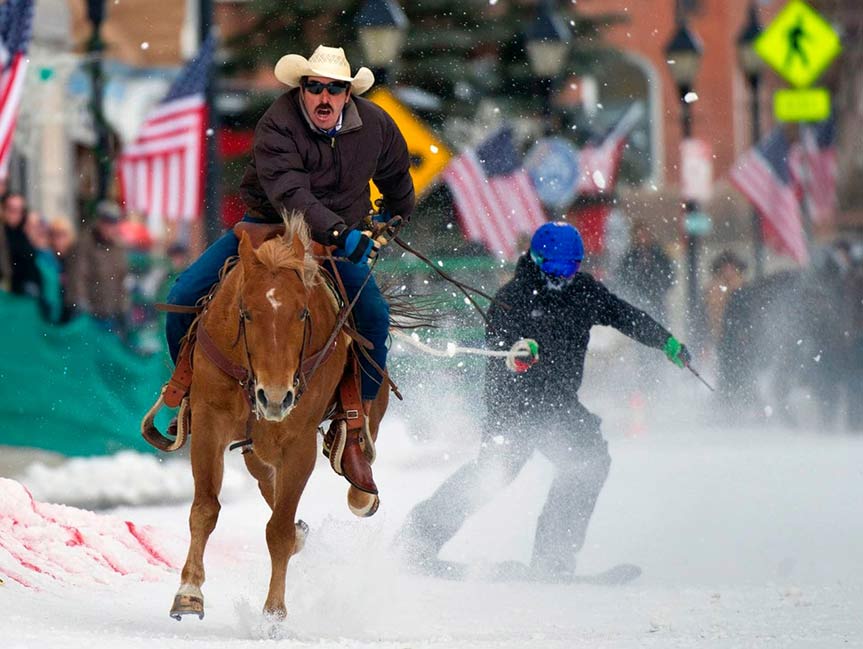
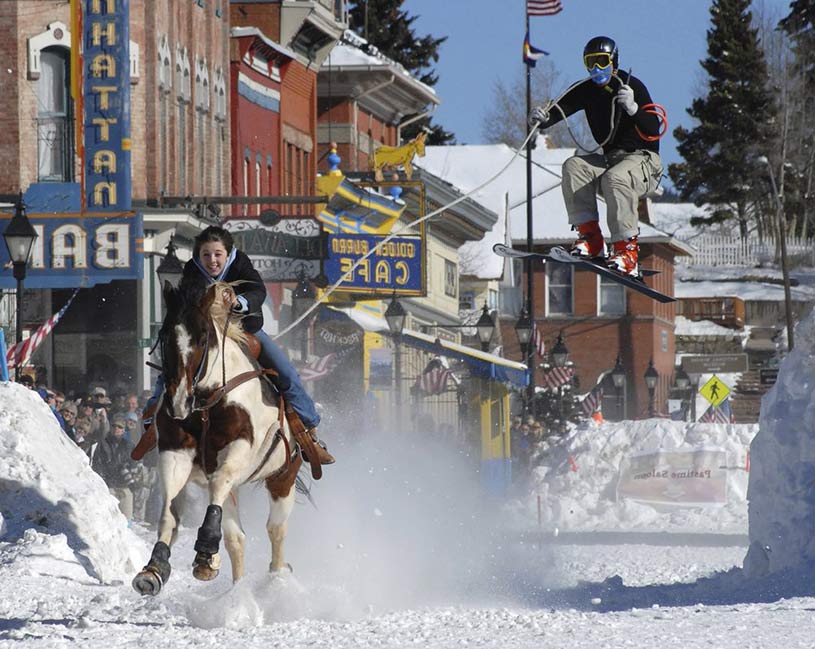
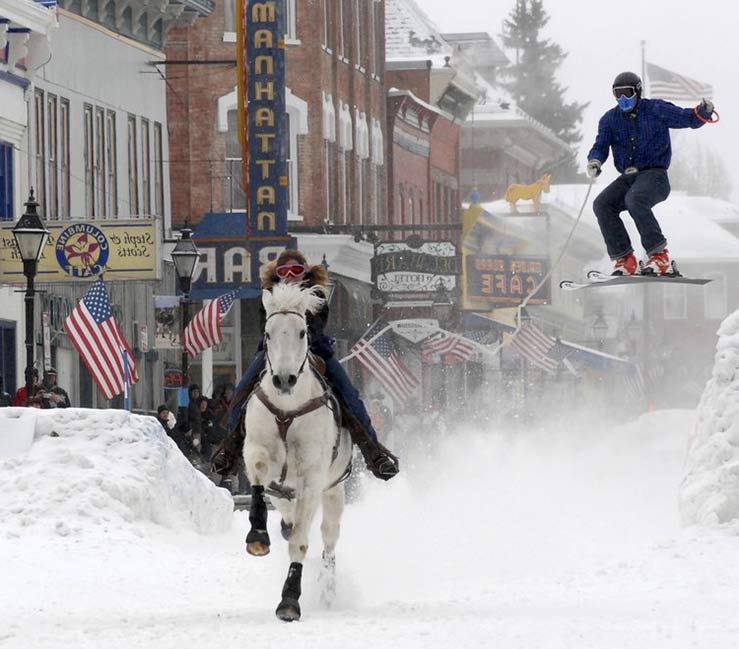
As with many winter sports, skijorers frequently fracture ribs, legs, and shatter their knees. Horses don’t always obey their riders and often refuse to follow the race course. In horse skijoring, there’s no stability or control whatsoever.
Horse skijoring competitions are held around the world, including in Poland and Russia.
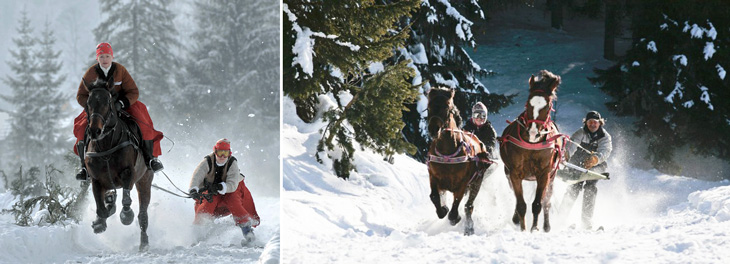 Competition in Zakopane, Poland, 2014
Motorized Skijoring
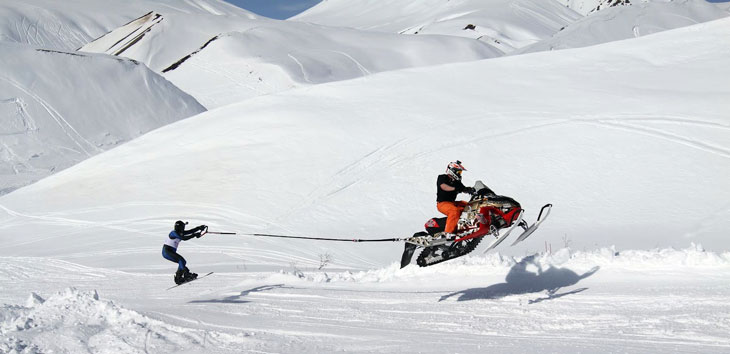
In the 1950s, towing skiers with cars and motorcycles was quite popular and even immortalized in the 1954 film “The Most Dangerous Sport in the World.” Motorized skijoring lost popularity for a time but has recently experienced a revival in Latvia, Austria, and Alaska.
https://www.youtube.com/watch?time _continue=3&v=fJessYxu8CE
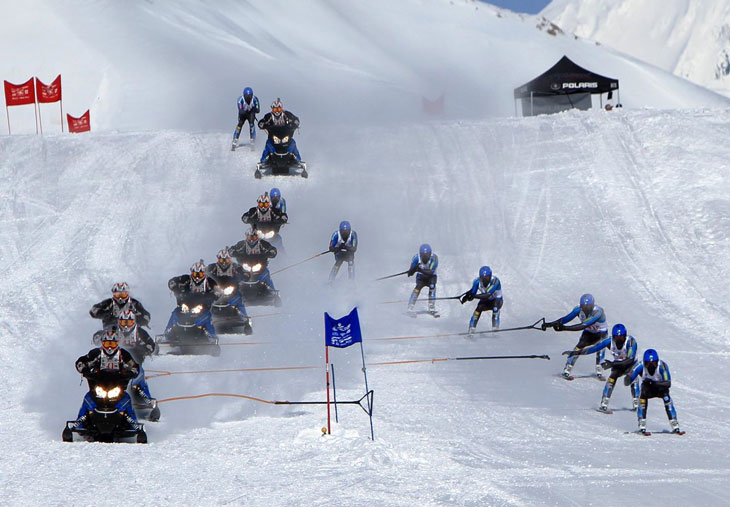
The main event in motorized skijoring is the Arctic Man Classic. It’s a race for teams of two skilled athletes—a skier and a snowmobile driver.
Arctic Man is one of the most challenging ski races in the world. The skier starts at an altitude of 5,800 feet and descends 1,700 feet over less than two miles to the bottom of a narrow canyon, where they meet their snowmobile partner.
Last year, around 13,000 spectators came to Alaska to enjoy this spectacular event.